

Published July 6, 2026
Independence Day, Redefined: What Owning a Home Means for the Veterans Who Earned It


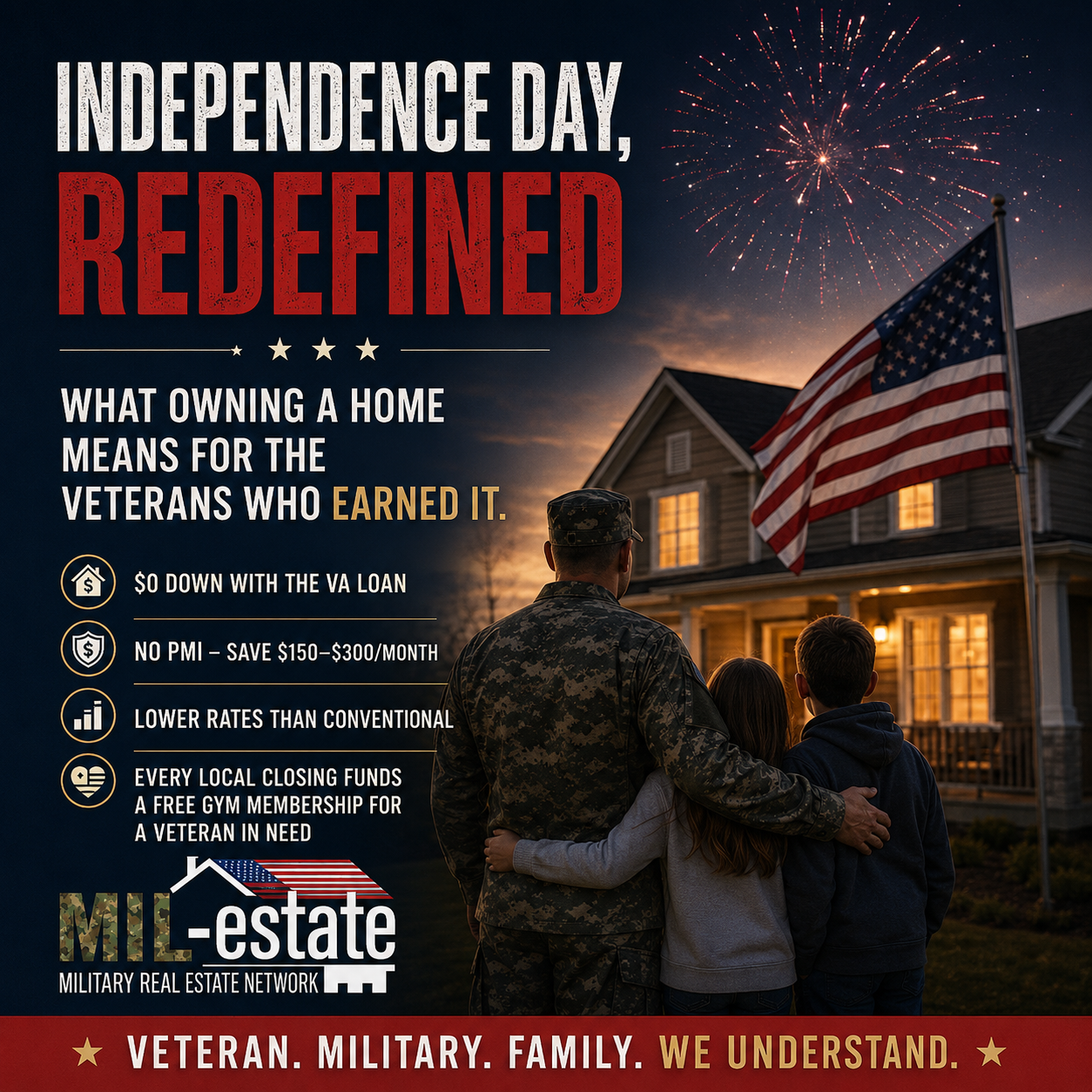
Every Fourth of July, America stops to celebrate freedom. Fireworks, cookouts, flags on porches. But ask a veteran what freedom actually feels like, and a lot of them won't point to a battlefield. They'll point to the day they signed closing papers on their first home.
That's not sentiment. It's a number. Veteran homeownership sits near 78% today, compared to roughly 65% for the general U.S. population — and that gap has been widening for years. It isn't an accident. It's one benefit doing exactly what it was built to do.
Why Veterans Own Homes at a Higher Rate Than Civilians
For most first-time buyers, the down payment is the single biggest barrier between renting and owning. A 20% down payment on a median-priced home in 2026 — projected near $425,000 — is roughly $85,000 in cash most families simply don't have sitting in a savings account.
The VA loan removes that barrier entirely. Eligible veterans, active-duty service members, and surviving spouses can buy with $0 down. There's no private mortgage insurance (PMI) requirement, which alone saves most buyers $150 to $300 a month compared to a conventional loan. VA interest rates also tend to run a quarter to half a point lower than conventional rates, because the loan is backed by a federal guarantee that reduces the lender's risk.
Add it up, and you get a benefit that doesn't just make homeownership possible for veterans — it makes it the financially smarter move in a lot of cases, even compared to renting. That's the real reason the homeownership gap between veterans and civilians keeps widening: the tool works, for the people who know how to use it.
More Than a House - Identity and Community
Here's the part that doesn't show up in a loan estimate. When someone leaves the military, they don't just lose a paycheck schedule. They lose their unit. Their mission. Their structure. The brotherhood and sisterhood that came with all of it. That loss of identity is one of the hardest, least-talked-about parts of military transition — and it doesn't get fixed by a mortgage alone.
This is where the mil-estate network matters most. Buying a home isn't just a transaction for a veteran — it's a chance to work with someone who actually understands the identity shift that comes with leaving the military, because they've lived through it themselves. Every agent in the mil-estate network is a veteran or military spouse, which means the person guiding you through one of the biggest steps of your transition has walked a similar path.
That's the model: 160+ real estate agents, every single one a veteran or military spouse, serving veteran and military buyers in more than 200 cities nationwide. No other real estate brand in the country can say that every agent in their network has actually worn the uniform or stood next to someone who has.
What This Means If You're Thinking About Buying
If you're a veteran who's been sitting on the fence about buying — maybe because you assumed you needed a big down payment, or because nobody ever walked you through what your benefit actually covers — this is the moment to ask the question. You already earned the tool. The only thing standing between you and using it is information, and that's a fixable problem in one conversation.
A mil-estate agent isn't just someone who knows the local market. Every single agent in the network is a veteran or military spouse themselves, which means they understand VA loans, BAH, PCS timelines, and the realities of military life from the inside — not from a training manual.
Frequently Asked Questions
Why do veterans have higher homeownership rates than civilians?
Primarily because of the VA loan benefit, which allows $0 down and removes the PMI requirement that most conventional buyers face. That single difference removes the biggest financial barrier to homeownership for eligible veterans and service members.
What does the VA loan benefit actually cover?
A VA loan allows eligible borrowers to purchase a primary residence with no down payment and no private mortgage insurance. It also typically comes with a lower interest rate than a comparable conventional loan, and a funding fee that — as of 2026 — is tax-deductible.
Is the VA loan available to veterans, or only active duty?
Both. Eligibility extends to veterans, active-duty service members who meet minimum service requirements, and in some cases surviving spouses. Members of the National Guard or Selective Reserve with six or more years of service may also qualify.
How do I find an agent who understands my VA loan benefit?
Look for an agent who works regularly with VA buyers and understands the appraisal process, funding fee structure, and entitlement rules. Every agent in the mil-estate network is a veteran or military spouse who has used — or helped a client use — the benefit themselves.