

Published August 5, 2026
What VA Underwriters Actually Look At (It's Not Just Credit Score)


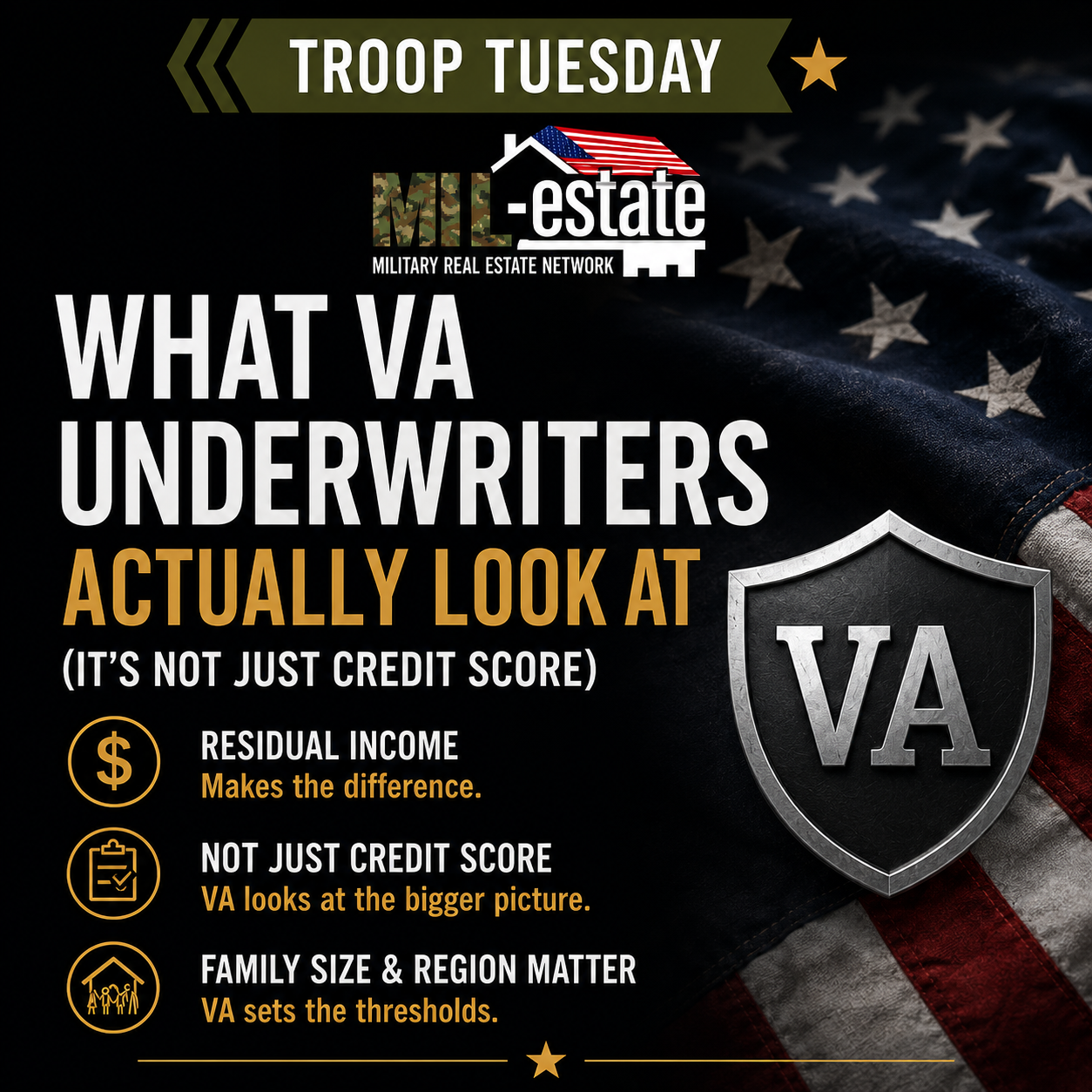
Quick Troop Tuesday truth about VA loan underwriting that most veterans don't hear until it's too late:
The VA has no minimum credit score requirement. Your lender does — typically 580 to 620 or higher — but the VA itself doesn't. What the VA underwriting system actually emphasizes, and what makes it different from every other loan product in the market, is something called residual income.
Residual income is the cash left in your household after all monthly obligations are covered — mortgage, debts, taxes, insurance, living expenses — calculated based on family size and geographic region. The VA sets minimum thresholds for this number. And veterans who look tight on a conventional DTI calculation often qualify comfortably when you run the full residual income analysis.
The practical takeaway: if a conventional lender or an inexperienced VA lender has told you that you don't qualify, that answer may be wrong. The math genuinely works differently under VA guidelines, and a lender who understands the program knows how to use residual income in your favor.
Every mil-estate agent in the network knows to connect buyers with VA-savvy lenders who run this correctly from the first pre-approval conversation. Link in bio.
Google My Business Post
VA underwriting is built differently — and it's worth understanding before you decide whether you qualify. The VA doesn't publish a minimum credit score; lenders set their own, typically 580–620 or higher. But what makes VA underwriting unique is residual income — the money left in your household after all obligations are paid, calculated by family size and region. Veterans who appear tight on conventional DTI often qualify comfortably on residual income. If you've been told you won't qualify for a mortgage, that answer may be wrong with a VA loan. Mil-estate.com connects veteran and military buyers with agents who know how to have this conversation correctly with the right lenders. Find yours today.
LinkedIn Caption (bonus)
A detail about VA loan underwriting that's worth sharing for anyone working with military clients in lending or real estate:
The VA doesn't set a hard minimum credit score — lenders do. What distinguishes VA underwriting is residual income: the household cash remaining after all monthly obligations, calculated using VA-specified thresholds by family size and geographic region. Veterans who appear over the conventional 41% DTI guideline often qualify comfortably when residual income analysis is applied correctly.
This matters because veterans are frequently told they don't qualify by lenders who are applying conventional underwriting logic to a VA transaction. For military buyers who've received that answer from a conventional lender or an inexperienced VA lender, a second opinion from someone who understands the program can change the outcome entirely.